Apologies that I have not posted an update in a while on the blog, though please do check the project forum threads on Deskthority and geekhack for more frequent updates. Brand New Model F Keyboards continue to go out.
Model F orders now ship within ~1-2 weeks – no more order backlog!
I finally finished going through the backlog late last year. The project has changed from the old made-to-order nature of prior rounds. This time I ordered a whole bunch of keyboards for the final round ahead of the received orders and every variation is now in stock, so there is no more long waits for keyboards, key sets, and accessories.
More than 4,100 Brand New Model F keyboards have shipped. Over 19,000 individual line items and over $2.2 million (including shipping costs).
New reviews and articles:
Here is a review article on the Brand New Ultra Compact F77 keyboard over at Cult of Mac
Here’s a nice in-depth article on mechanical keyboards initially featured on the home page of The New Yorker – the Brand New Model F project is mentioned
My talk at Google: a presentation on the project to bring back the Model F keyboard
I was generously invited to speak at Google’s main NYC office on 9/29/22 and had a terrific time as a guest there. Their offices are fascinating. I am hoping that the speech and slide deck can be posted publicly at some point.
Brand New Beam Spring keyboards project update:
The order window has just opened for the Brand New Beam Spring Keyboards, available in various cases and layouts at the two links below. You no longer need a reservation to order either keyboard. Please check out the discussion of the project over the past few months at the below link:
I’m hoping to get the tooling completed but it will take some more months before round 2 finishes production. If you’d prefer to use a keyboard in the coming months, or you prefer the modern style design over the far heavier and bigger classic style of the forthcoming round 2, I definitely recommend round 1 if you have signed up early enough to be offered a spot.
The needed tooling is for the updated cases (will be made by CNC/laser cutting/bending process, not with a die cast mold, so there will not be extra months. New molds are currently in production for the beam plastic parts as noted before, to adjust them slightly to accommodate the presence of inner foam between the top of the beam modules and just below the top inner assembly, just like the originals. The molds are estimated to take about 6-8 weeks, starting from a few weeks ago. The foam had a definite dampening effect on the sound and made it a little closer to the originals. Due to these adjustments I would not recommend buying round 1 in order to move the modules to the round 2 case as the part of the module inside the inner assembly will not be taller but the part that sticks out on top will be about 1mm taller, so as to better lock in with the increased height needed due to the foam. Confirmed there will be holes in the bottom case to allow mounting of both the solenoid and solenoid driver, as well as holes for 4 bumpers with screws.
Apologies I still have to make the renderings for the other keyboards. The design is expected to be the same dimensions for all Round 2 keyboards, except the BSSK will chop off a few inches on the right side compared to the B104, the B62 will chop off the right block of the BSSK, and the B122 will add an extra row on top for F13-F24 and extra space on the left side for the 10 function keys, compared to the B104.
Confirmed the ultra compact design is just for the first round. This could change if there is sufficient demand for a Round 3. The good thing is it’s not too costly to make your own case since no mold might be needed – just laser cutting and bending metal. The Round 2 beam spring’s inner assembly can be put into another, more compact case design if anyone on the forums wants to manage such a project themselves. Also the modules are now available to order individually with the hope that folks can design their own keyboards.
The Round 1 product page will be marked as out of stock once the limit is reached and no more keyboards can be ordered.
For those who want to request to switch from Round 2 to Round 1, here are the steps:
Please order the keyboard and extras that you want, and choose “other payment” at checkout.
Please place a separate order of units of the store item $1 increments and choose free/other shipping at checkout, right before clicking Place Order. The quantity of $1 increments to order is the price difference between your orders.
Round 1 ultra compact case; in stock; ANSI only; limited to 150 units of each size 104-key B104 and 87-key BSSK:
Round 2 classic style case; shipping later this year; ANSI/ISO/HHKB models available; layouts include B62 (F62 style), BSSK, B104, and B122:
You can also see two new Beam Spring typing/sound test and step by step setup videos here (they are the same ones embedded on the individual beam spring product pages)


Chyros / Chyrosran22 teardown of the new beam spring switches

Many thanks to Chyros for taking a look at the new beam spring modules and doing a teardown that shows how the module works. The second half of the round 1 batch with the factory replaced beam springs arrived, so now the entire first round of beam spring keyboards is in stock. I will be replacing the other 150 or so keyboards’ springs that arrived a while back, before the spring issue was discovered.
As a note, there are no reliability issues detected from the beam spring switches that are any different from the IBM originals. My comments on the beam flippers detaching is no more or less frequent than my experience with the detachments of the IBM originals, with a note that they may detach as the keyboards are bounced around in shipping, so folks will need to set up and check their beam spring keyboard before they can start using it. The new ones do not detach more or less frequently, and can be reattached in the same manner as the originals. I did not mean to imply that the new modules are any different from the originals in terms of reliability. The only difference as Chryos pointed out is that the new modules have a slightly different sound to them, with the installed module sound being more similar with the round 2 boards than with round 1 (matching the weighting, key travel, etc. was the main focus for the beam spring project, not an exact reproduction of the sound, as mentioned in the first post on the beam spring project thread).
In my testing over the past couple years, I do not recall modules failing due to fatigue with usage, though to be safe I do expect to include a first aid kit of 4 modules with each keyboard at no additional cost (plus the option of a deluxe first aid kit with 12 modules for additional future maintenance).
Also the pricing has been finalized and the first round already finished production and is in stock, so pricing is not an unknown variable at this point.
New store items: pandrew 3178/122/AT/Unsaver controllers, trackpoint keys, and USB-C cables in additional colors
As an update I have ordered 20 assembled pandrew 3178/122/AT/Unsaver controllers plus the same number of USB C 5V pro micros, though you have to solder the pro micro itself to the pandrew controller. They are now in stock.
2 of these are for my recent 3178 Model F keyboards, of which one is for sale on the project web site.
I recently added Gray, Red, Dark Blue, and Light Blue USB-C colors to the USB cable product page.
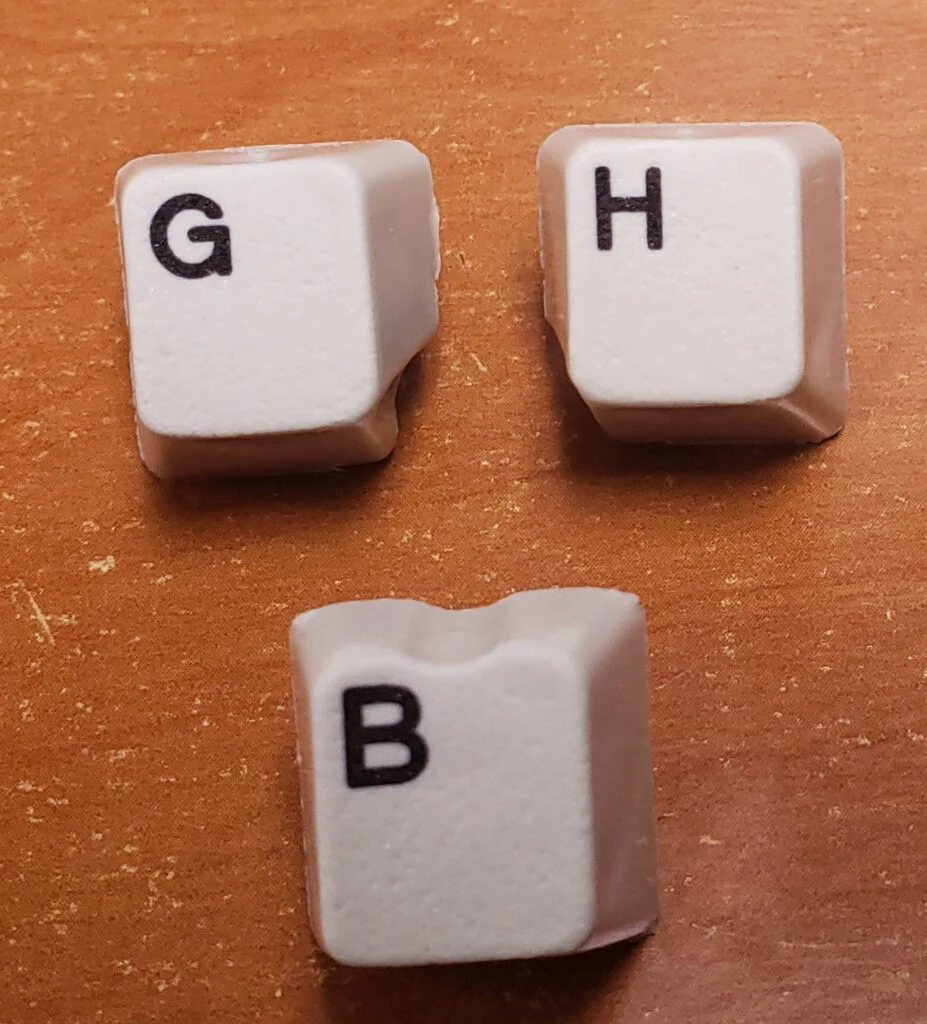
G H B trackpoint keys, factory sublimated. The keycaps are sourced from Unicomp. The texture on these particular keys is a bit different from the other keycap textures.
I had mailed the factory some stepped 1.75U caps lock keys and GHB trackpoint keys so they could sublimate them and send them back to me – this way the legends would match the other new Model F keys. These are now in stock.
A kind email about the project
I am sharing (with permission) a kind email I received recently about the project. It serves as a great introduction to move newcomers into the world of mechanical keyboards, and specifically, the Model F. Some folks are far better at summarizing the appeal of the Model F than I am!
“I just wanted to write you an email to show how much I appreciate all the effort you put into the Model F reproduction project. I think it’s an amazing achievement, and I worry that this fact might get forgotten among the few complaints or negative feedback I’ve seen on the internet, which you’ve already done your best to address.
There is really no keyboard like the IBM 4704 you decided to bring back. Regardless of the noise pointing to the lack of F-keys and additional navcluster/numpad to fully accommodate those refusing to learn QMK and adapt to anything non-standard, I don’t think you could have chosen a better candidate. The 4kg zinc case feels and looks like no other keyboard, with its imposing presence and wide bezels reminiscent of a 60s space age movie prop, while being the perfect housing for capacitive buckling springs. The feel of these switches are amazing, and it provides a highly engaging typing experience that I would compare to the driving experience of a classic Ferrari Testarossa – manual and heavy, requiring the full involvement of its user, but rewarding with exquisite tactility and sound.
I own lots of keyboard, most of them deviating greatly from the standard, instead being tailored to optimise ergonomics and productivity. Yet I still find myself placing the 4704 onto my desk, simply to enjoy the act of typing, as it offers an experience unlike anything else, making the activity feel substantial and turning typing into a goal in and of itself.
Most keyboard enthusiasts nowadays, particularly those that spend lots of time and money on the hobby ordering and building custom keyboard parts, seek very different goals in the form of highly customisable keyboards with colourful keycaps with amusing legends, compact cases with artifical weight through attached blocks of brass, gasket-mount with silenced (through innumerable hours of modding and lubrication) MX-clone linear switches to achieve a very specific muted “thock”. To these people the Model F and similar keyboards are a curiousity and unsuitable for use – perhaps because they are too different from what they are used to. Unfortunately, markets gravitate towards demand, and therefore there are extremely few exceptions.
In comparison to these keyboards, the 4704 is a bargain at $350, considering a custom keyboard easily reaches double that while offering miniscule differences from a premium off-the-shelf keyboard for $200.
It saddens me that another keyboard on the same level as the 4704 reproduction, while still being perfectly usable for modern computing, may never exist. I acknowledge there may be no other keyboard that could fit this role better, but maybe there exists one that could do this differently, while still being at the same level? If anybody is familiar with unique typing experiences throughout keyboard history, that would be Chyrosran22 – I wonder which other keyboards he would see worthy for a revival. Likewise I’m eager to see what comes out of the beamspring reproduction project. I sincerely hope you will consider reviving a classic case, as if there’s one thing the 4704 has taught me, it’s that the case means as much as the switches. Finally, there’s that crazy guy manufacturing Symbolics 365407 Alps clones in his own house, claiming he wants to one day do it with beam/buckling springs, although his reluctance to adopt Chinese mass production means they will continue to have very limited reach.
I don’t know how you feel about unsolicited feedback, or if you’ll even find this email, but I hope it will serve as a reminder amongst the noisy reality of manufacturing a consumer product, that you have created something very grandiose and generously made it available to anyone with interest for a reasonable price. You did so without compromise and by dedicating yourself fully to it over a very long timeframe. Nobody else would have, or even could have done this, and a shame it would be if that were our reality. Thank you.”
RP2040-based Model F controller project
Rico’s new RP2040-based controller samples have arrived! Check out this great project to create an RP2040-based controller for capacitive buckling spring keyboards. A big thanks to Rico for undertaking this project. The rounded PCB traces are especially nice.

We have a new key set – Quebec CSA!
Please order this set directly through the Full Key Set product page. It’s the very last option that was just added. I received several of these sets from the factory by air mail this week.
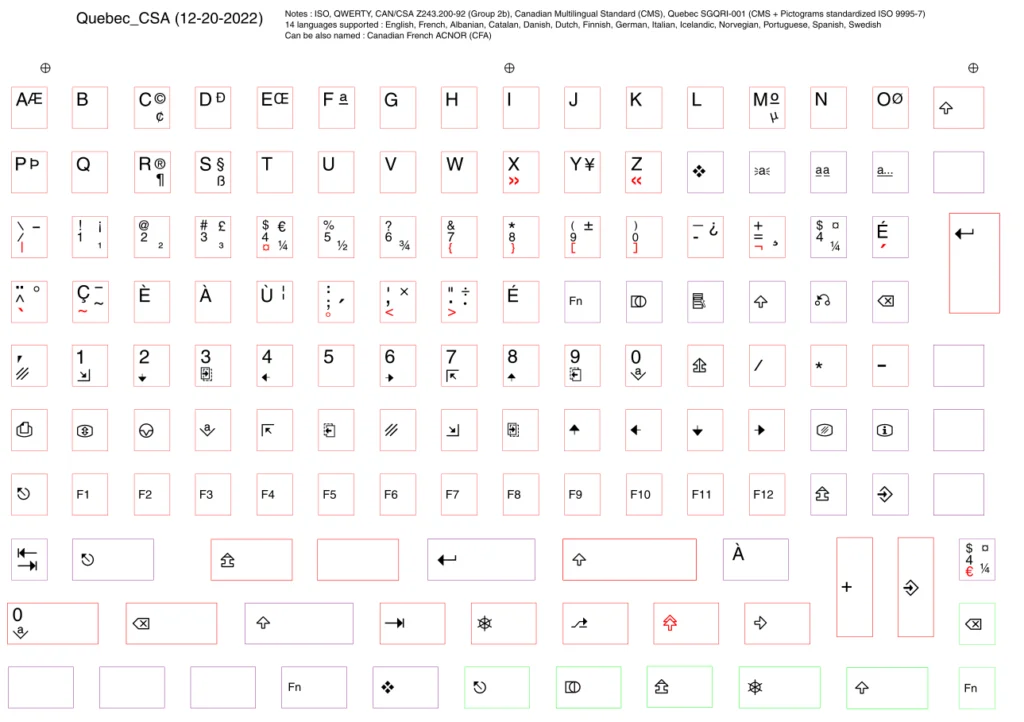
Here are some notes that I was sent:
“- This layout works only on Windows and Linux, Apple has developed its own CSA keyboard, called Canadian French ― CSA but it’s not exactly the same keyboard layout. Apple respect only partially this standard (the ligature œ is located with q for example). If you are interested I can send you another template using this layout. For now, I am interested in the Windows/Linux version.
– 4¤ and É are drawn twice because the Linux version is different and doesn’t use the € sign.
– I am interested in the F77 industrial grey with the Numpad #3 (with an arrow inside a diamond for the Enter key used in the Numpad).
– I am also a VIM user and I would like if possible a second Caps Lock key with the proper Esc pictogram, not ESC or Esc but an arrow inside a circle, it’s there in my template.
Ideas (relocate ESC key):
1) Home Row (where caps lock is, then relocate caps lock between
ctrl and alt)
2) Between ctrl and alt
Other points :
In the newest version, the ligature Πmust be printed (E key).
Also, the pictograms must be used instead of english or french labels,
same thing over the numpad.
The triangle replace the decimal separator (numpad).
– Return and Enter are pretty similar but are not exactly the same.
Enter (arrow inside a diamond) go with the numpad). Return (just the arrow pointing left) to with the alphanumeric keys.
– The pictogram “centering” with the 5 key (numpad) is now obsolete and can be skipped.”
PS/2 support on Model F Keyboards: New project by Deskthority member Arkku
See here for additional details:
USB PID code has been granted
There was discussion about obtaining a unique USB PID code for the controller. I have now obtained the code 4704
https://pid.codes/1209/4704/
This code is for all open source xwhatsit controller projects and derivatives; permission is not needed from me to use the code for any such purpose.
A great Model F history resource; the last production line Model F keyboards made from all new parts
If they do not know already, I wanted to let folks know of a great Model F history resource in addition to the Deskthority wiki – lots of great photos and information: https://sharktastica.co.uk/wiki?id=modelf
I am wondering which person has photos of among the last production line Model F keyboards made from all new parts, if they have labels of all the various dated components in the board (the WWYY of the controller or capacitive PCB, labels on cables, the case bottom label, etc.). Some F107s formerly in my collection I believe had everything dated 1990; personally I have not seen any all 1991 Model F keyboards. Shark has noted a 1992 Unsaver, as well as 1994-made (or refurbed?) 5291s: http://kishy.ca/?p=1606 As shark notes on the wiki site, Lexmark did refurbish keyboards well into the 1990s, as late as 1996. I can confirm several of my F107s had controllers and capacitive PCBs with production dates of 1996 while the rest of the keyboards clearly had components dated in the prior decade, including the F107’s metal cases.
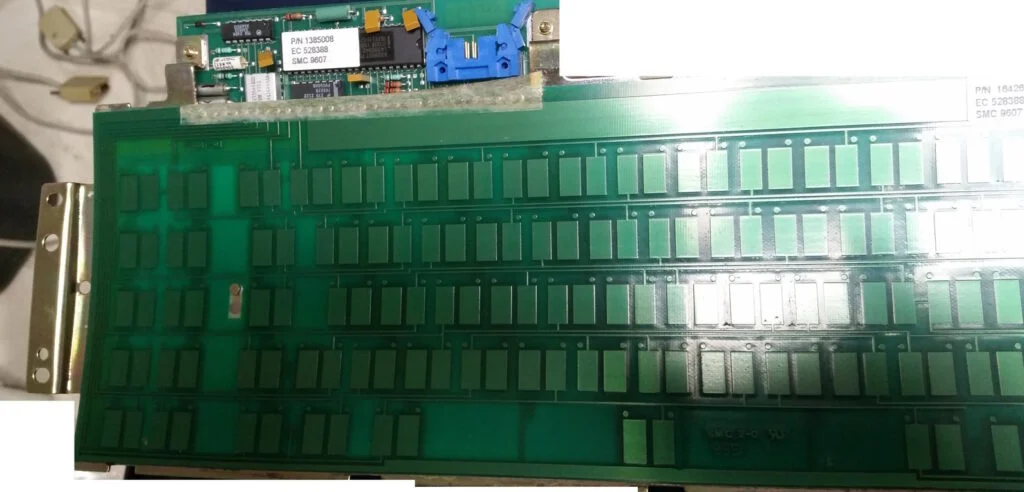
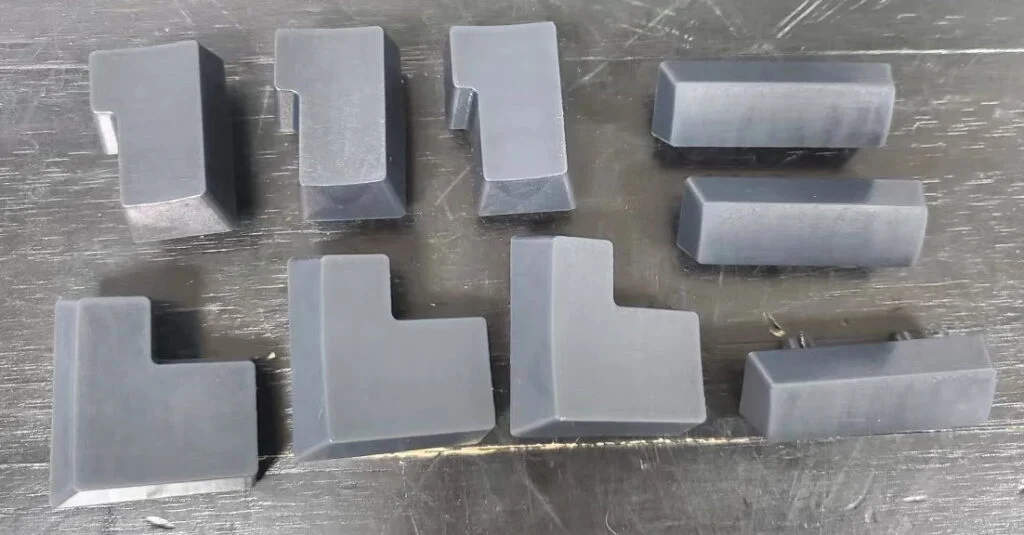
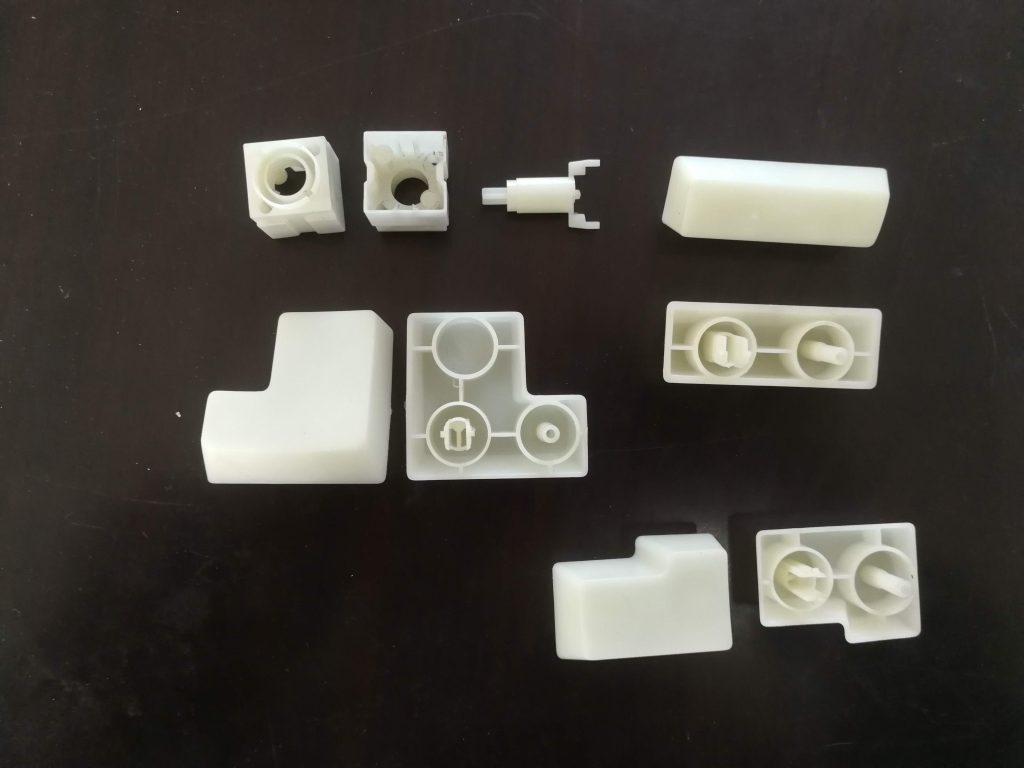
Injection molds are in production for additional key sizes PC AT, ISO Enter non-stepped, and Code key
Please sign the interest form linked below to reserve your non-stepped ISO Enter, Code key, and PC AT enter keys
I ordered the non-stepped ISO Enter, Code key, and PC AT enter key molds, so we will be able to have pad printed black keys as well as dye sublimated non-stepped ISO Enter in international language options too.
The first 3d printed sample keys for the PC AT style enter, code key, and non-stepped ISO Enter key were produced last August (shown in the first photo below). The production units are all injection molded of course – I do not use any 3d printed parts for anything in the shop. I have ordered the wheelwriter style code key and wheelwriter-style PC AT enter key; this key should be backwards compatible if you use the new horizontal insert (I am not making the old rectangle style insert/post as this key is not an exact reproduction of the PC AT’s enter key which appears to have been designed before the latest stabilizer insert design was finalized. This PC AT enter key has no wire stabilizer, a standard horizontal key style post on the bottom left barrel, and no post on the top, same as on the wheelwriter. The code key closely reproduces the wheelwriter version as well.
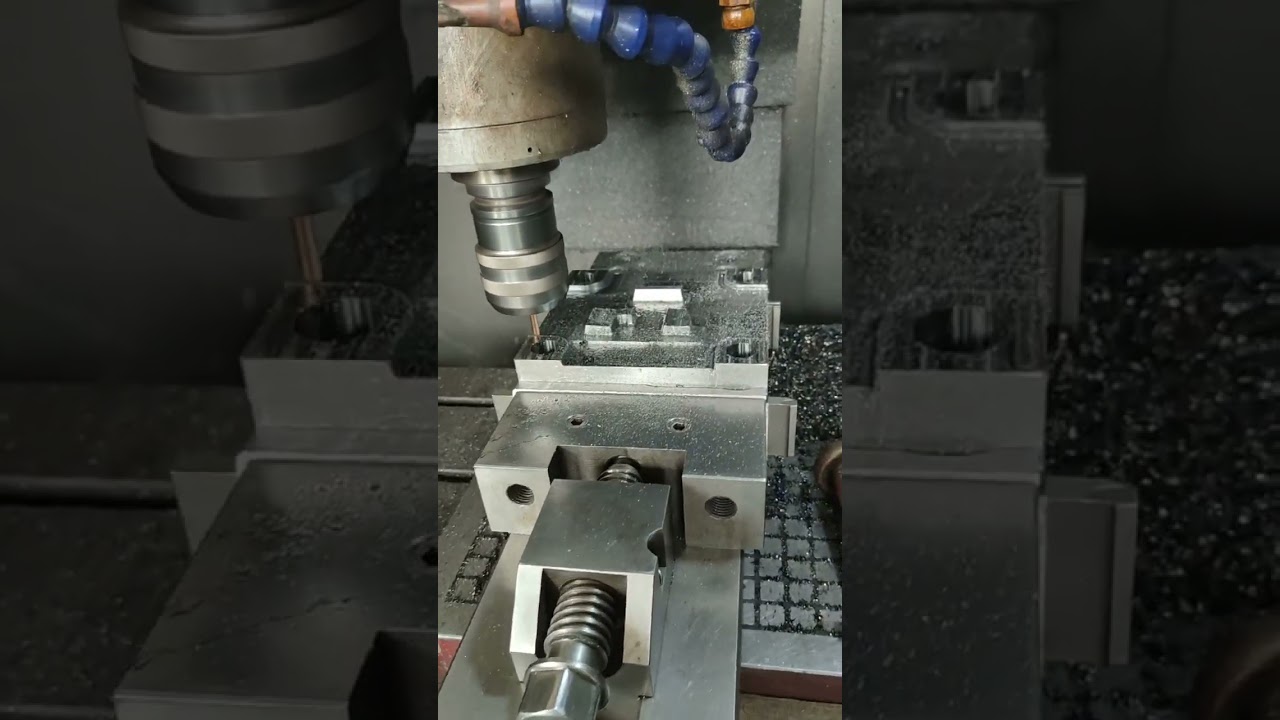
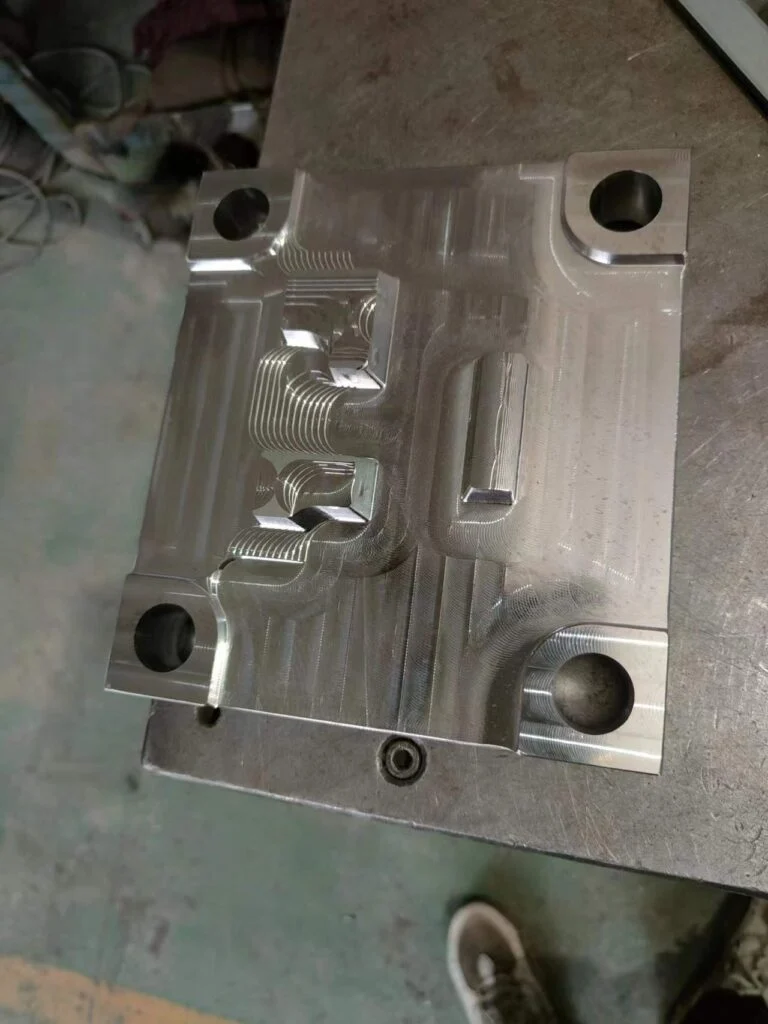
This video shows the CNC milling in progress for the new mold for the 3 new keys: non-stepped ISO Enter, Code key, and PC AT Big Enter. The keys will be available in all new Model F project colors.
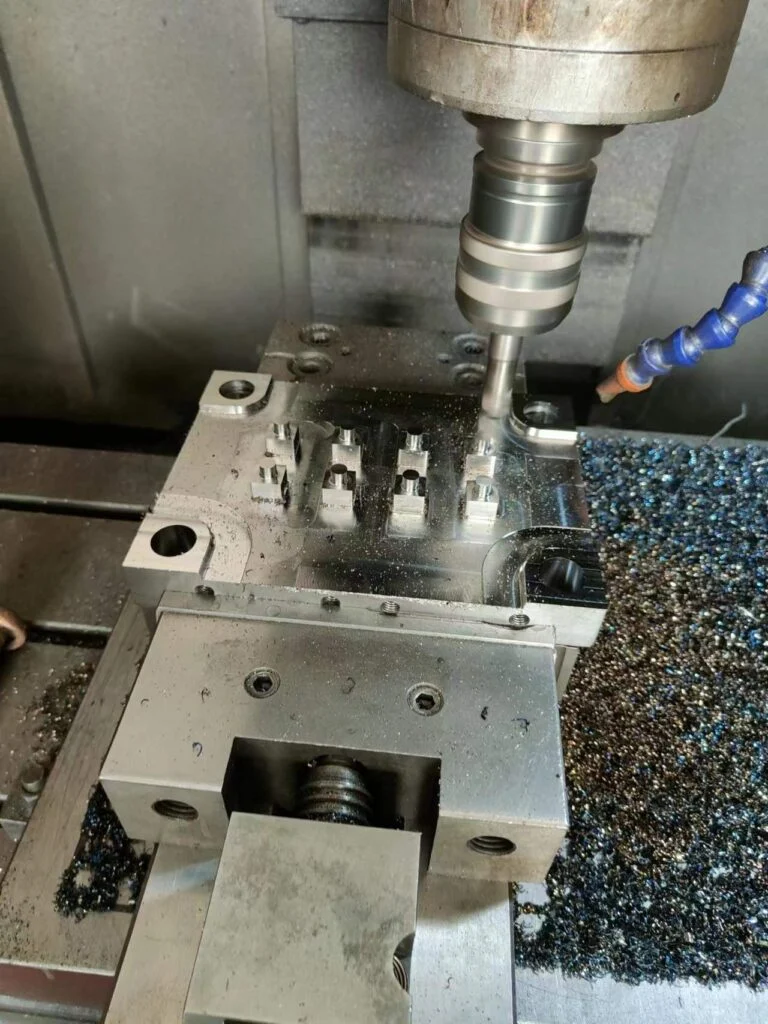
Below are some photos showing the new key and beam spring module molds currently being made at the factory




Below are the very first injection molded samples of these parts, which do not yet have the production colors.
Here’s a nice video someone sent me showing off the pen holder and solenoid on the F77

Some more nice keyboard photos
Here’s another great keyboard photo – this time of the new dark blue ultra compact F77 keyboard with the new production unprinted dark gray keys. Posting with permission.
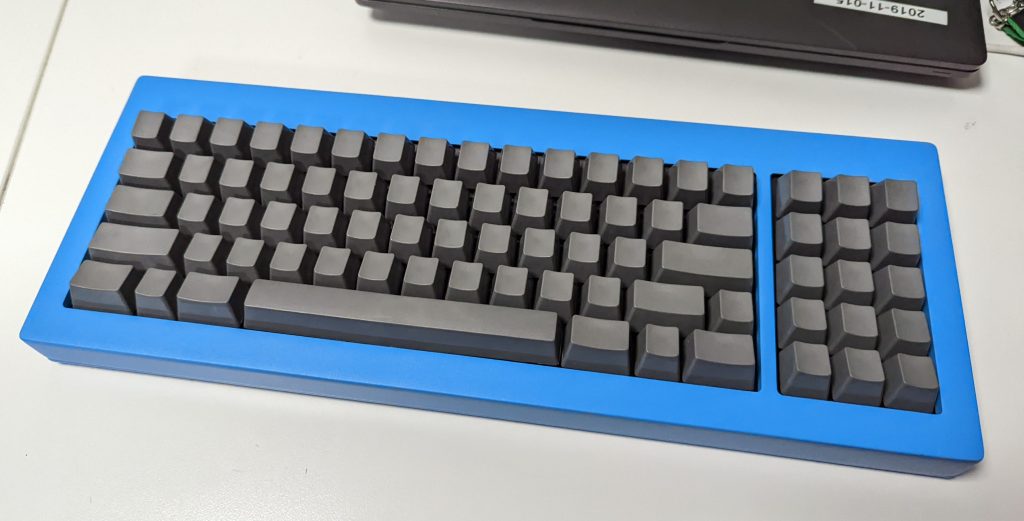
Posting with permission another nice setup – an ultra compact case F62 with dark gray keycaps.

Posting, with permission, another nice and unique setup, this time of the F62 classic style keyboard in Industrial Gray, with a customized split right shift layout.
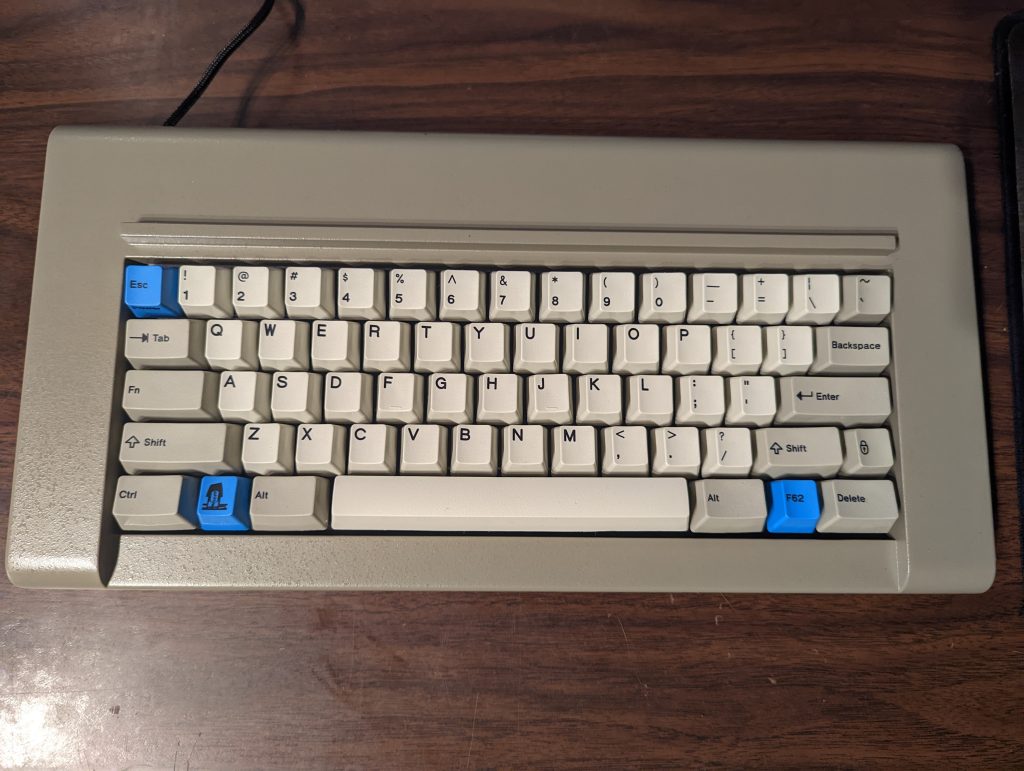
Another nice F77 classic case setup, sharing with permission. I had to share it as it features my favorite pen. I’ve been using Pilot Precise V5’s for over 20 years.
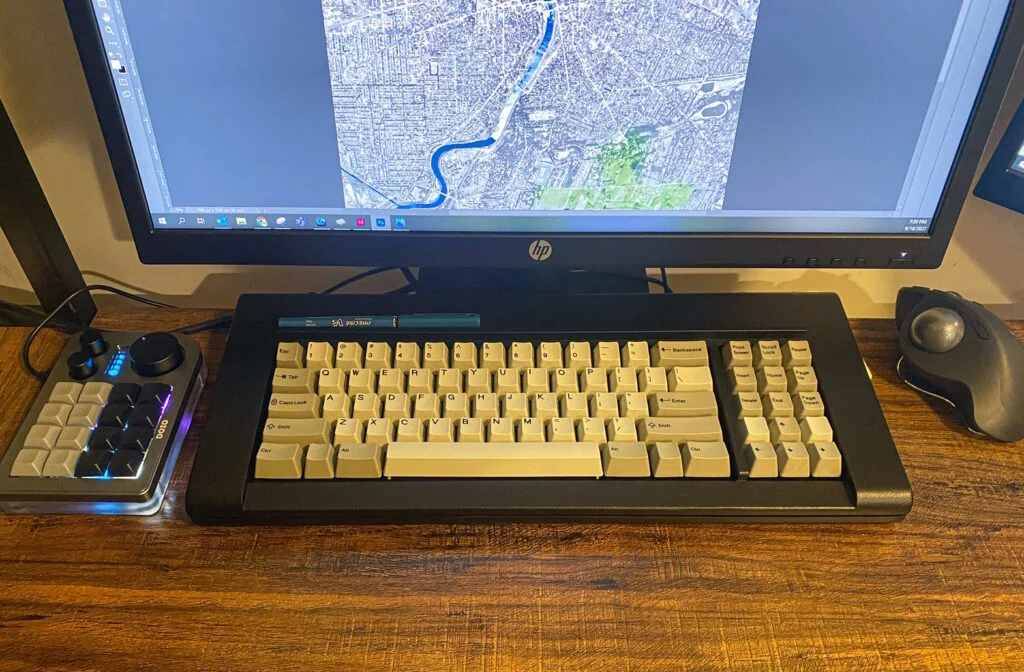
Posting with permission a nice F77 Industrial Gray photo sent to me. The UK layout customizations include HHKB style split right shift, UK front printed keys and some blue Esc and cursor keys.
The unique cable is from https://cablelab.co.uk/
An Ultra Compact F77 with JIS keycaps from Unicomp (the top keyboard in the photo):

Here’s a nice photo (posted with permission) of an F122 with custom legend keycaps:
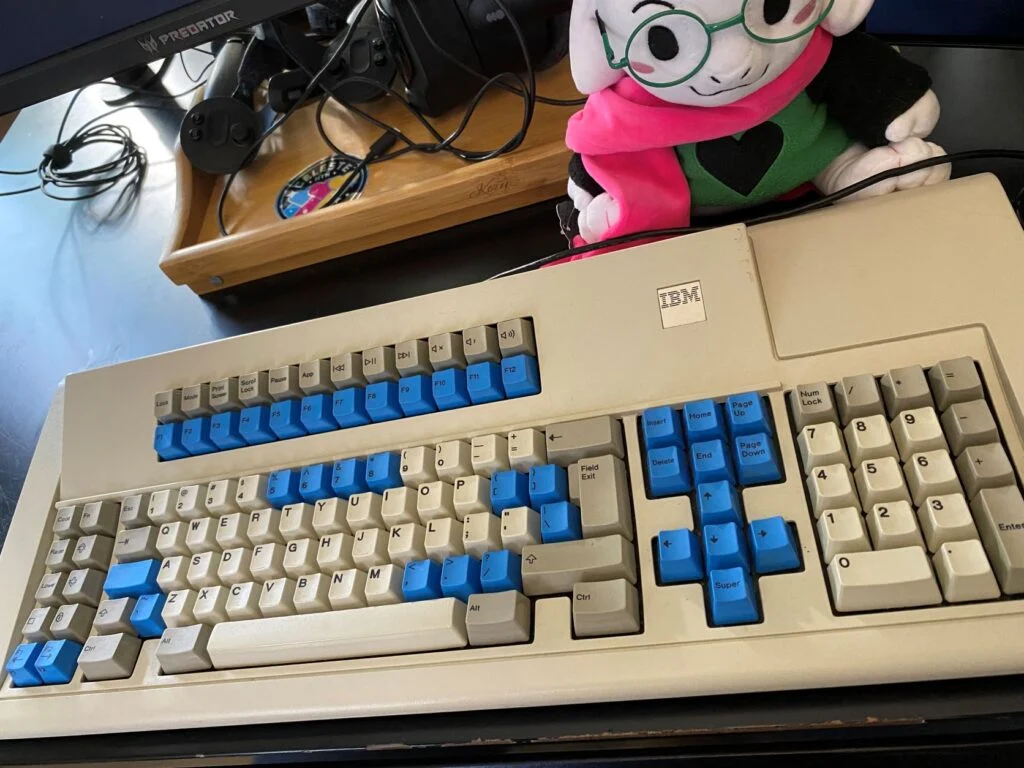
The first image below shows a custom right side block, while the other shows the F77 with Industrial SSK 12 key set and the F1-F12 front printed keys. Glad to share both of these images as I have not seen too many photos of these customized layouts.

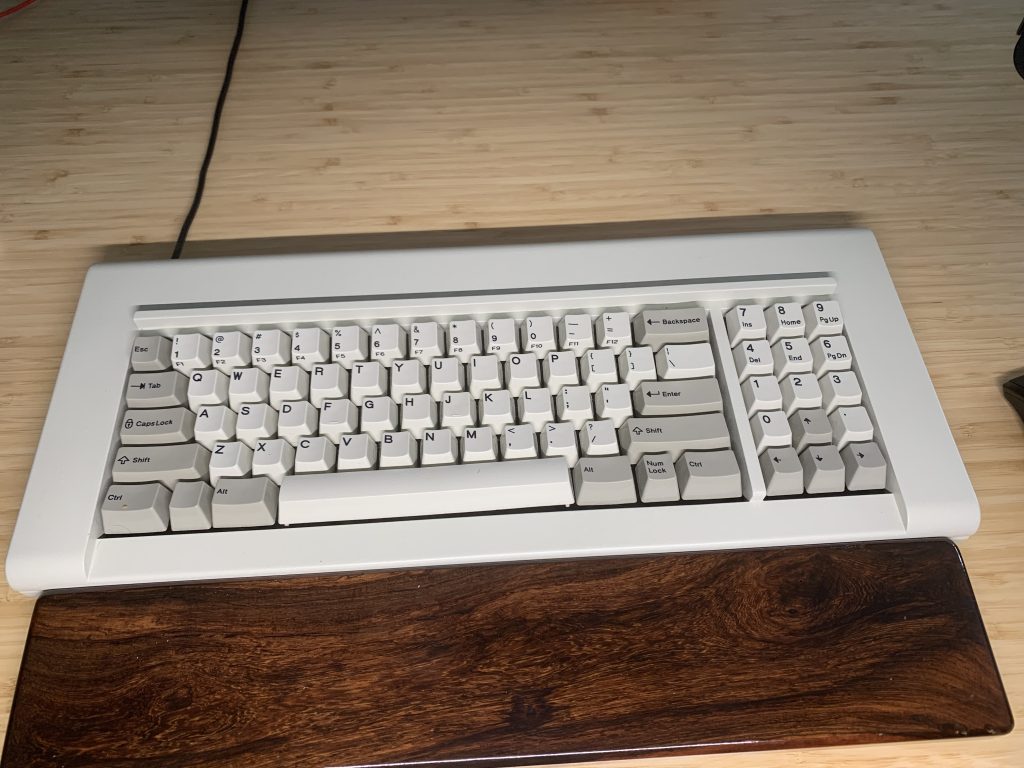
Posting (with permission) one of the newer ultra compact case colors – Off-White/Beige, a color more common to the classic style cases.
This keyboard features Meta and Super keys, which along with the Hyper key, are often used with Linux and Lisp / Space Cadet according to the link below.
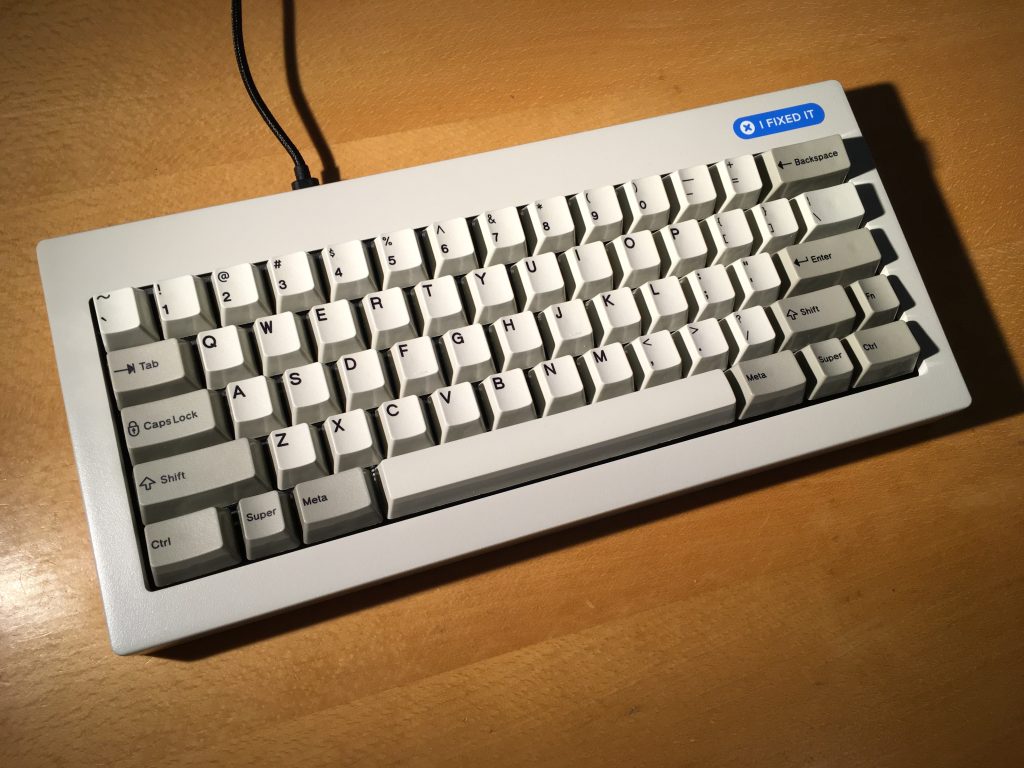
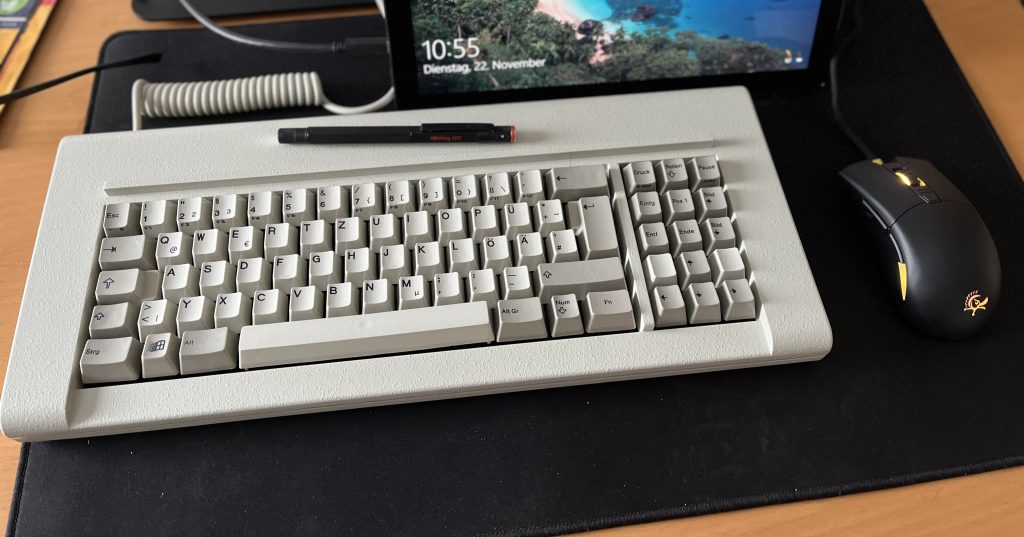
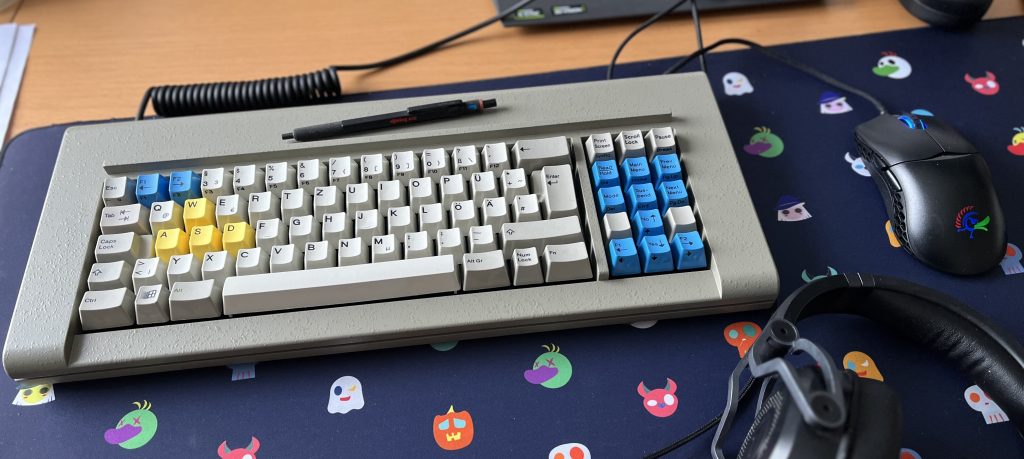
Here are two F77 classic case style keyboards from the same person, with a customized German layout including the Industrial SSK 12 key set, German front print F1-F12, and keys from Unicomp: 1.5 Fn centered, Windows, and yellow WASD. Posting with permission.
AZERTY Model F with customized right side block
Some additional follow up on another nice modification from the user who modified their keyboard. Sharing (with permission) photos of the latest status of the keyboard and a description of the steps taken for this mod:
“There are three parts to turning a BNMF into replica Model 300. The keys, the labels, and the cable. Ordering a beige case, the new 4704 keys, and the relegendable keys is an obvious first step. You will then need to source the characteristic stepped modifiers as well as others. They can all be found on the IBM 3180 keyboard. The model M variant is part number 1390238. It seems to be rare but not overpriced.
For the labels I printed out the provided scan of original 4700 key labels and yellowed the paper with watered down coffee. After it dried, I used my IBM Wheelwriter with 12pt Courier to type some of the legends.
The cable is spliced: USB-C , DB9, USB-A. Sacrifice the USB-C end of a charging cable (or in my case the original cable my model F came with) and splice it with any 4 of the 9 cables inside the DB9. Order USB-A terminal parts and splice those on. Check the pins!
Next, get a serial hood and DB9 connector terminals. You need to melt all the plastic and pins out the connector terminals with a soldering iron. The USB-A end will then fit through it. I used hot glue to seal them together; be sure it sticks out enough to fit securely into a variety of ports. Fit your improvised serial plug inside its plastic housing. Align everything carefully and test that it works; once you stuff the housing with glue it will not open. If done right, your cable should be as beefy as the model F itself. For reference, the weight of my keyboard exceeds 9 pounds with this cable.
After this you will have a BNMF that looks as close to a Model 300 as you can get! If you are like me though, looking the part is not enough. Sadly I did not add a beeper and volume knob; the parts were more than I wanted to spend, but using VIA I did program the machine to work like a typical IBM keyboard of the time.
The function key swaps between three layers. For reference, FN is the right blank key, and left control is Reset. FN + LAlt activates alphanumeric mode: the right-side block types what it says. There is no numlock key so it is stuck in this mode until reset. FN + RAlt disables all keys except those needed to reset the keyboard. FN+ Reset resets the keyboard to its default layer. In this layer the right block becomes a nav cluster.
Beyond these modes, the FN key can be combined with tab to press End, or PD2 for Home. FN+ backspace presses left arrow. FN+ the “Test, Cursor, Blink” keys do those tricky CTRL+ALT+DEL style shortcuts. Finally, right control is enter, PD2 is backtab, PD3 is another enter key. There is no escape key unless you press FN+ `. Although it might not sound so this is a comfortable layout because each key does what it says for the most part.”
This board has some of the new Extra Keys (some of which recently arrived from the factory: terminal, 4704, Icons, Extras, num pad/right side blocks, front printing), as well as some customized transparent relegendable keys, which allow you to print graphics for both the top and front of the key so you can have a custom key with custom front printing for multi-functionality.
This may be one of the first photos I’ve seen with a near-original 4704-style configuration!
Here are some details on the fonts used:
“most the numbers are whatever font IBM used. It looks like Public Sans though. The period is Public Sans too. Fira Code for the two slashed zeros, after seeing a picture of a model M style macro pad with that on. Finally, my Wheelwriter uses Prestige Elite at 12 cpi. That’s what all the VISA CREDIT stuff is written in. All the words [on the relgendables] are Prestige Elite. I typed it manually on my wheelwriter.”
![Here are some details on the fonts used:“most the numbers are whatever font IBM used. It looks like Public Sans though. The period is Public Sans too. Fira Code for the two slashed zeros, after seeing a picture of a model M style macro pad with that on. Finally, my Wheelwriter uses Prestige Elite at 12 cpi. That’s what all the VISA CREDIT stuff is written in. All the words [on the relgendables] are Prestige Elite. I typed it manually on my wheelwriter.”](https://modelfkeyboards.com/wp-content/uploads/blog/2023/01/16/f77-mod.webp "Brand New Model F January 2023 update 30")
![Here are some details on the fonts used:“most the numbers are whatever font IBM used. It looks like Public Sans though. The period is Public Sans too. Fira Code for the two slashed zeros, after seeing a picture of a model M style macro pad with that on. Finally, my Wheelwriter uses Prestige Elite at 12 cpi. That’s what all the VISA CREDIT stuff is written in. All the words [on the relgendables] are Prestige Elite. I typed it manually on my wheelwriter.”](https://modelfkeyboards.com/wp-content/uploads/blog/2023/01/16/f772.webp "Brand New Model F January 2023 update 31")
Several additional nice customizations posted on the Deskthority forum project thread
Fourth container shipment update: this final round shipment was delivered in October
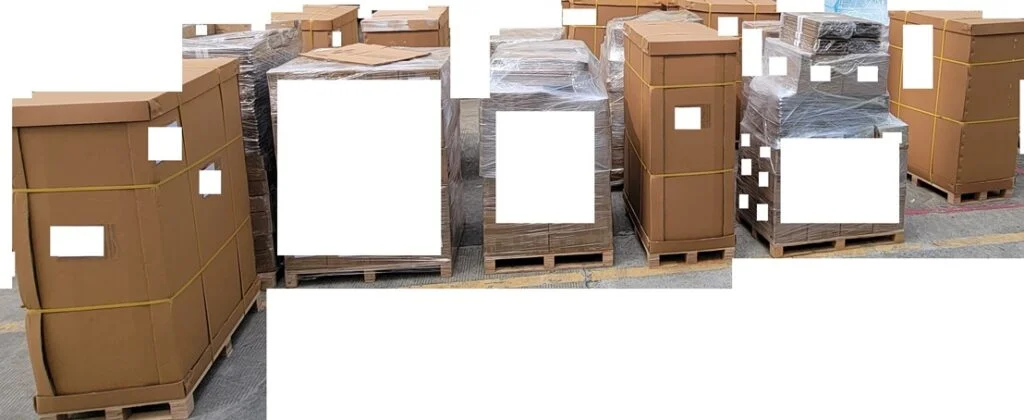
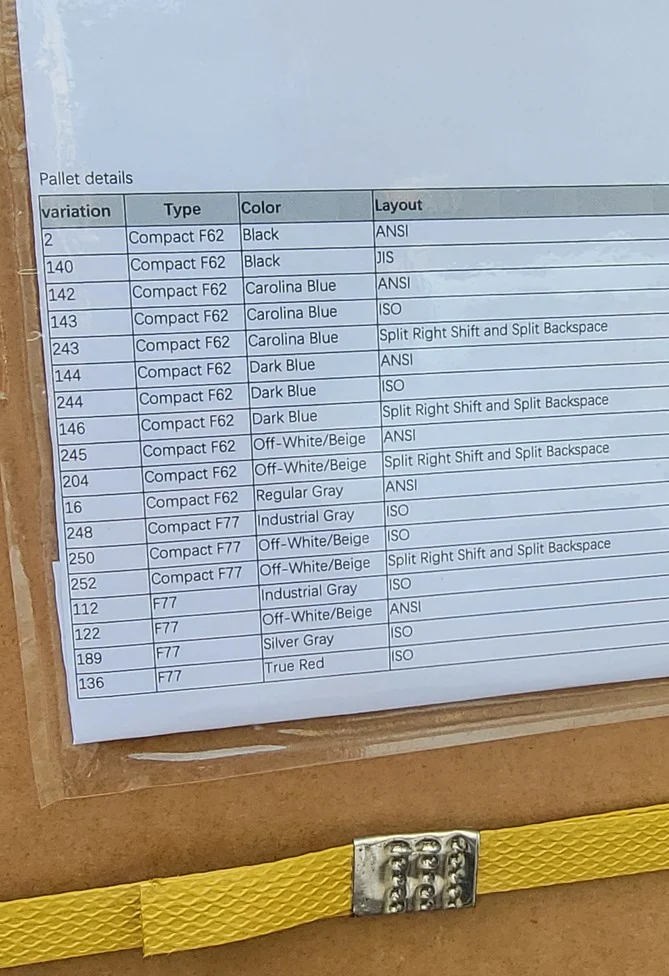
We are moving into the final round. The final round left the factory in August and arrived in October – this one has the other ~150 beam keyboards too, as part of the 300 keyboards of the first beam spring keyboard production round. For the final round I ordered all variations of the keyboards and accessories in advance, based on the proportion of each variation ordered over the past couple years, so that everyone will likely be waiting only weeks for their keyboards as opposed to longer. However costs are far higher across the board (!) so please expect pricing to be higher for these keyboards if you are not planning on ordering in the near future. Only some of the boxes are visible in the below photos but it was a full 40′ container.
The second half of the round 1 batch with the factory repaired beam springs arrived. I will be replacing the other 150 or so keyboards’ springs that arrived a while back, before the spring issue was discovered. Of course if anyone wants to skip the line and replace the springs themselves that will also be an option (I expect to post a video).
You may see in the photos below that the new classic style zinc case F77s are in the smaller packaging, removing the styrofoam and saving about 40% of box volume, allowing many more keyboards to fit in the same space. The styrofoam is still present on the F62 zinc case boards from this batch, as they made extras of these.
I ordered lots of extras (first aid kits, inner foam, solenoid drivers and solenoids, key sets, custom keys, etc.) so feel free to pick up some of these items while they are still available.
The final round changes are around the packaging only. F77 classic case box sizes are reduced by about 40% and the styrofoam original-style packaging has been replaced with the newer foam style of the ultra compact cases. The factory has too much F62 styrofoam still in inventory (the styrofoam mold makes both f62 and f77 at the same time and there were more 77’s ordered than 62’s) so you’ll still get that for the classic style F62 keyboards. The boxes still have the same artwork and double-walled construction quality.
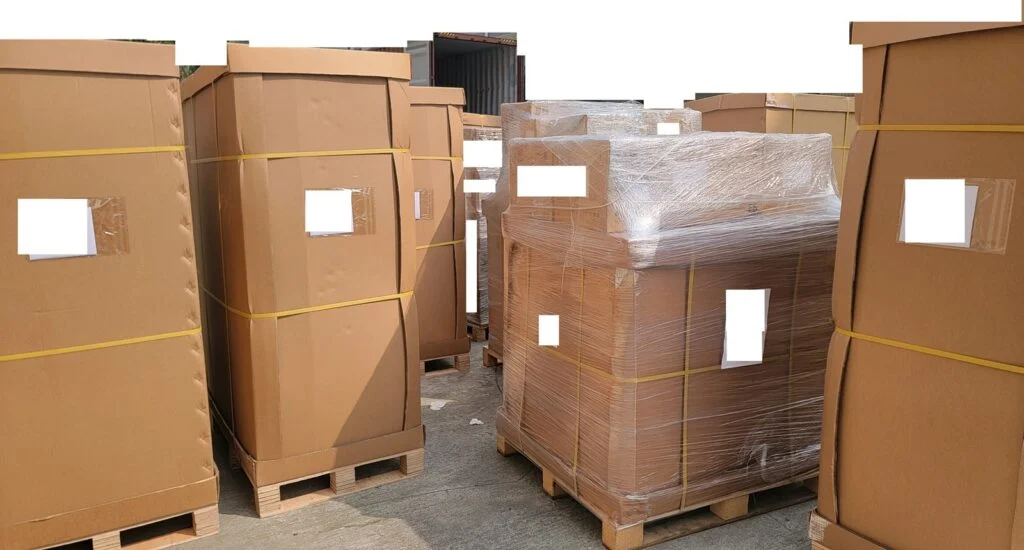
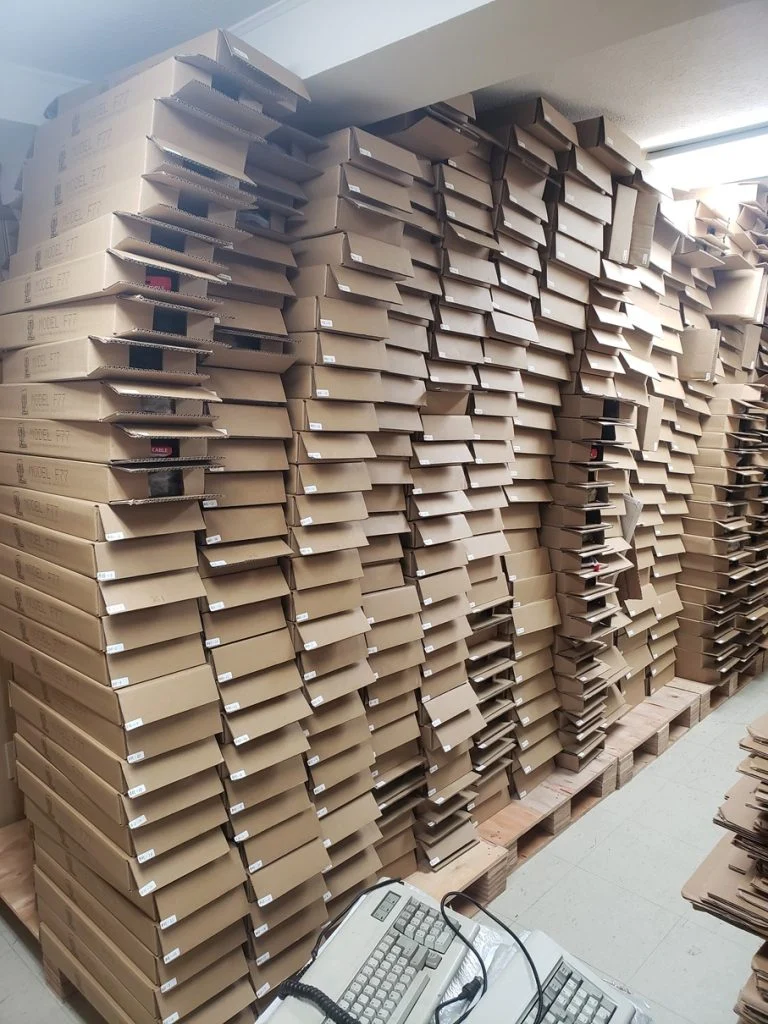
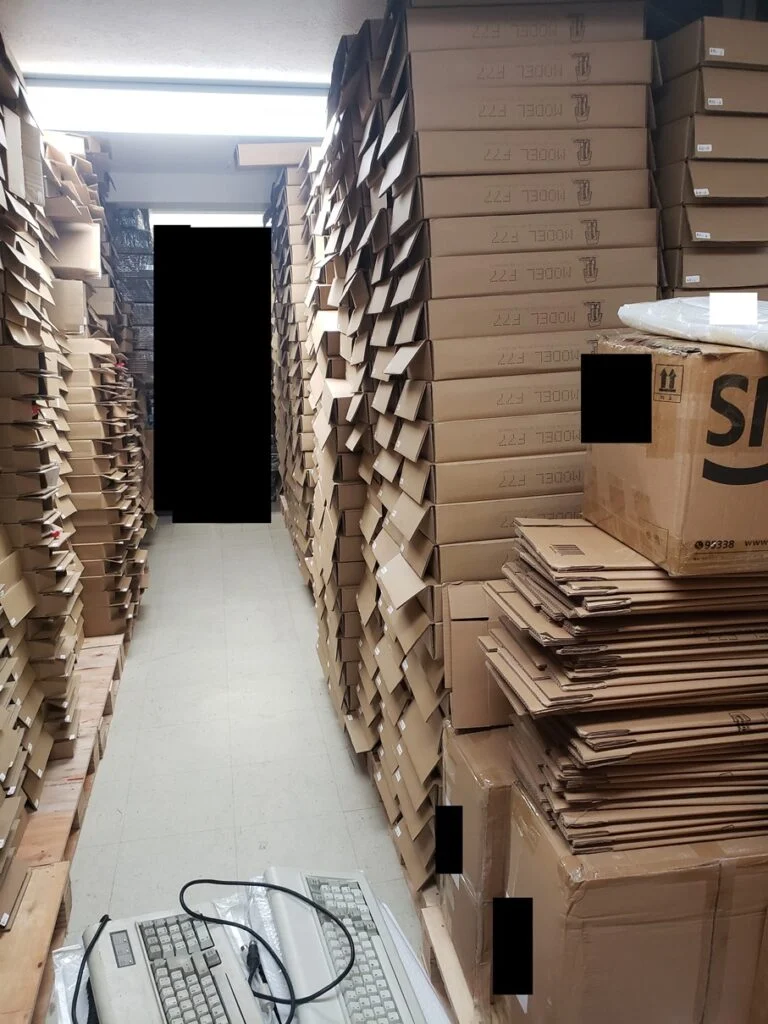

Pad Printed Model F / Model M keys update
In October I purchased the giant pad printing machine for the factory to use on the pad printed black keys. This machine was not easy to find as most pad printing machines cannot print an entire key set at one time, so I believe the machine is being custom manufactured and adjusted by the factory.
A reminder to please sign the interest form below if interested in pad printed black keys in various languages, if you have not done so already:
Beam Spring module sound comparison
As noted before, the beam spring project is designed to reproduce the performance and functionality (weighting, travel distance, module specifications) of the originals but with some updates (shortened the two plastic parts of the beam module without altering the travel distance); the sound is not going to be similar to the originals for the first production run because of the design changes (no added foam above the modules, no rubber below, no thick case, etc.). The modules themselves sound close in my opinion but the goal of the project is not an exact sound reproduction.
Here’s a sound comparison of an original module and a new module – this is just one module of each so it will likely not represent what each module will sound like, and it especially does not represent what the installed keyboard sounds like (more test videos with the full keyboard will be made later).
Nope there will be no plastic cases. I’m hoping the beam modules will be interchangeable but I have not yet received the new beam case sample to confirm this. All the cases will be powdercoated aluminum or steel (sorry no more extra heavy zinc!).

Here are some nice floss mod and solenoid videos on YouTube – good quality sound!


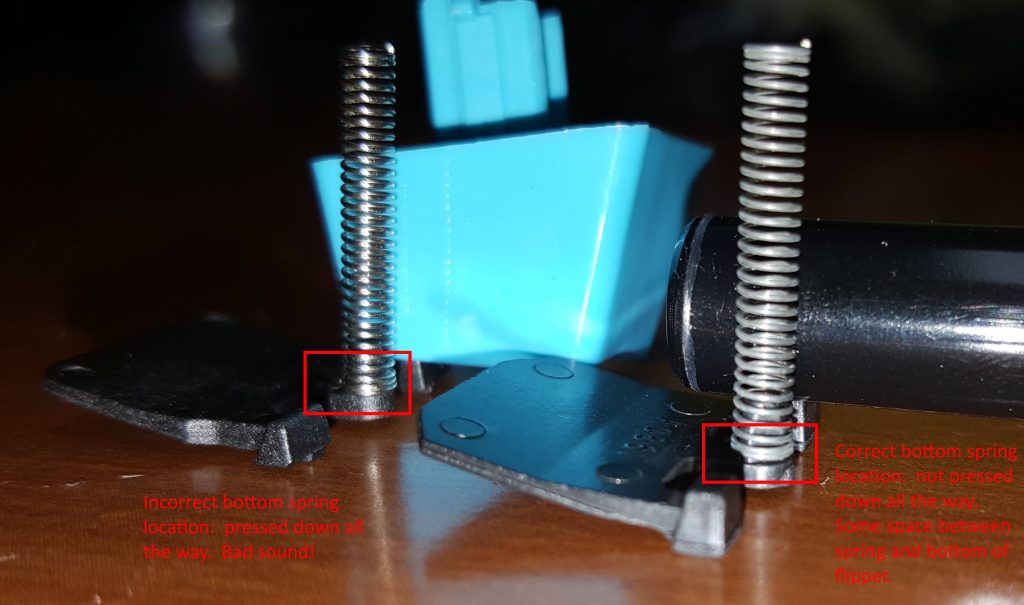
Some more spring research tidbits
Adjusting the distance between the bottom of the spring and the bottom of the nub of the flipper can oftentimes eliminate buzzing of the spring. Sometimes it’s too much distance; wiggling a fingernail in between to widen things can eliminate the buzz. In other examples, moving the spring downwards can fix things. That’s why removing and reseating a spring can remove the buzz sound from the spring because it happens to be in a different distance with each installation.
I also had some experiments done with a low number of hours in salt spray testing to see if the springs could be corroded and/or artificially aged. Even with the springs left in for the full amount of the test (~10 hours or so – not enough for full testing) the new production springs did not visibly corrode. Unfortunately there was no benefit to this artificial aging in terms of sound quality (though maybe the test was too brief) so no springs will be offered with this option.
A note on the abundance of technical discussion and setup topics on the forums
You are seeing much discussion of issues on the project thread this year due to me shipping a couple thousand keyboards in recent months. It’s nice to receive a note that all is well, but most folks only email/post if there is an issue. If several dozen out of 3,000+ folks are posting with issues that does not indicate mass quality control improvements needed. All of the most common issues are fully addressed in the manual. The top issues are spring adjustment issues, keys that break in the mail and occasionally issues with the controller soldering or a flipper that gets stuck and needs to be moved into place. As opposed to the originals, the end user needs to install the keys and adjust some springs if necessary, which is different from the IBM days when everything was fully installed and tested, driven to the business or computer store by truckers and not by mail for the most part, and just had to be plugged in to start using. Unfortunately the project does not have the economies of scale or time to install all of the key sets as discussed on the project thread; it would add so many variations (dozens of variations multiplied by over a dozen common key sets) and would have added additional months of delay due to installation time.
I would not say that the springs are lighter on the new Model F as they are the same weighting and specifications as the originals. The lightness may be due to the corrosion of the original springs affecting the weight of the IBM originals, combined with the reproductions being new and without all the gunk that clogs up an original (I find the originals to be smoother and lighter after an ultrasonic bath of the plastic components and some alcohol scrubbing of the barrels). Also many folks may not have had access to dozens of original IBM Model F keyboards as I have in my collection over the years – the spring weighting did vary a bit even between examples of the same part number. New F’s may be lighter than some original F’s and heavier than other originals.
The new Model F keyboards are not buy at your own risk. They are covered by a limited warranty. If a component is damaged and covered under the limited warranty then it will be repaired or replaced. The project philosophy statement in the manual explains why there is no service contract option with a full staff to handle returns, exchanges, repairs, technical support, etc. and instead keeping the keyboard as low a cost as possible, about half what IBM charged (adjusted for inflation). There is an emphasis on teaching everyone to be able to set up and maintain their new Model F keyboards long after the project is done, so that they can hopefully use it for decades to come.
I strongly recommend reading the manual fully before doing anything. The manual notes that in the event of some keys on the edges touch the case and get stuck, you just need to loosen the 4 case screws and slide the inner assembly over, as it likely moved out of position slightly during shipping. Also check to make sure the 2 inner assembly plates are fully making contact, as shown in a photo in the manual with the circled parts in red. If not, moving the inner assembly will not fix the issue.
Flippable Model F feet
Here is a recommendation from Deskthority member clickclack on flippable Model F feet. “Esc Flip Keyboard Stand”
Solid advice from some forum members – further details on the wiggle method
“pelletik wrote: October 5th, 2022
My enter key binds or sticks. I read the owners manual several times. The stabilizing insert is pushed all the way that it’s flush to the barrel. The ears are left and right. I pulled a enter key off of a model m and installed it in my F77. The model m enter key works in my F77 and does not bind. I think I have a bad enter key. Does anyone have any suggestions to get the enter key to not bind? It’s the only key that I am having an issue with.
pveentjer wrote: October 6th, 2022
I also had a problem with binding keys like enter and shift. What helped to reduce the binding a lot is to pull off the key. Flip the key and you will see 2 parts sticking out; one is the stabilizer pin which you can ignore. The other part that sticks out has 2 legs. Grab these 2 legs ‘high’ between your thumb and index finger so that the keycap is very close to your skin and give it 30/40 good squeezes and try the key on the keyboard. It could be you need a few rounds of squeezing to get rid of most of the binding.
The binding went from ‘totally unacceptable’ to ‘barely noticeable. Only when you hit the key completely off center (furthest away from where you are normally hitting the key), I can feel binding with the shift; with the enter it is no problem at all.”
Spring length experimentation
With permission I am quoting someone’s interesting experimentation to adjust the spring length and add o rings to the keys, and some questions for everyone:
“I am working on an ergonomics-motivated modification to reduce key travel on the Model F. As part of the process, I have to stretch the springs by just the right amount to move the actuation point closer to the top of the keystroke. This is a pretty tedious and error-prone process, and once over-stretched, I find it difficult to compress the springs again without introducing buzz, so I am going through a lot of springs this way. For my purposes, the ideal spring length is 18.75mm, as measured by my Vernier calipers.”
My reply: During my R&D, I actually ordered 2 batches of springs slightly longer than my current batch, 18.475mm and 18.5 mm. [note 9/7/22 I still have more than 160 springs available of each type if anyone’s interested – please PM or email me]
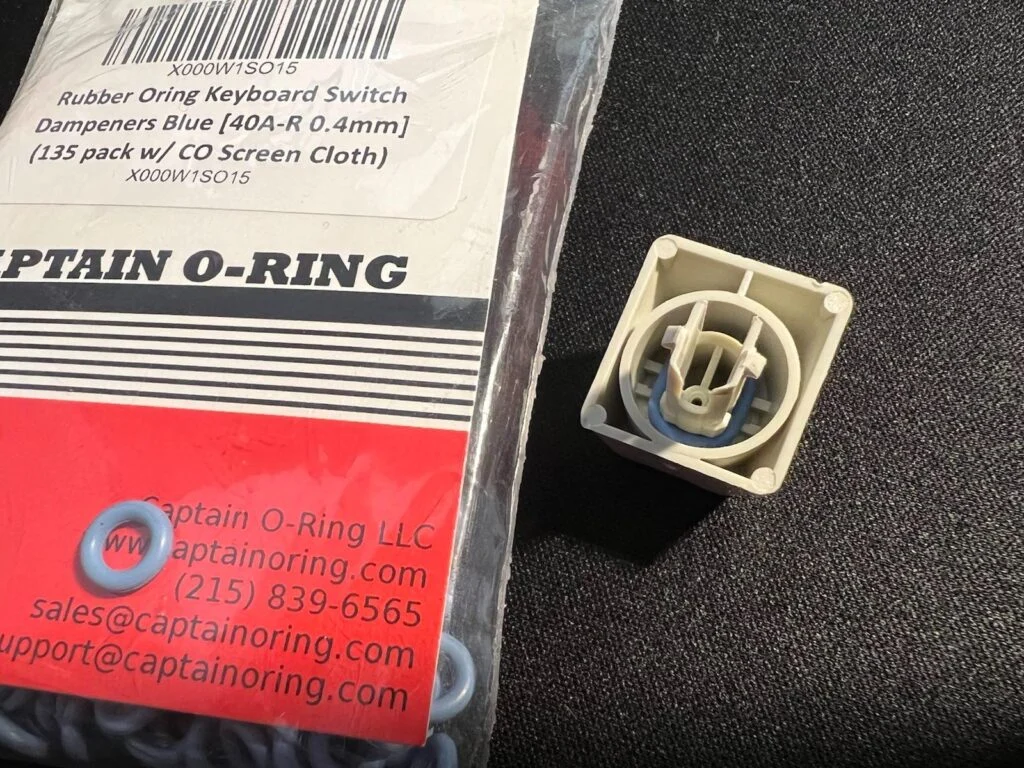
Replying to me: “I just installed the new springs in a couple of keys that were giving me some issues, and I am happy to report that the longer springs work really well. They require just a very gentle stretch to work with 0.4mm EPDM O-rings around the stem (a trick carried over from the Cherry MX world — see attached). This reduces vertical key travel a bit and makes the keyboard a little easier on the tendons. I am somewhat curious to see how much more I can reduce it, but that is a task for another day when I have more free time. For now this already makes a huge difference in comfort.
What other ergonomics tricks are you aware of with the F62/F77? One of the things I really struggle with is the height of the thing. I built up a temporary palm/wrist rest out of an existing one and some cut pieces of a mouse pad stacked on top of one another to form a gentle slope toward the middle. This helps with using the space bar without making my thumb tendons too angry and the slight “hill” in the middle takes some load off of the pisiform bone when resting the hands. I made a thread with some ideas here. I am curious to see how others solved similar problems.”